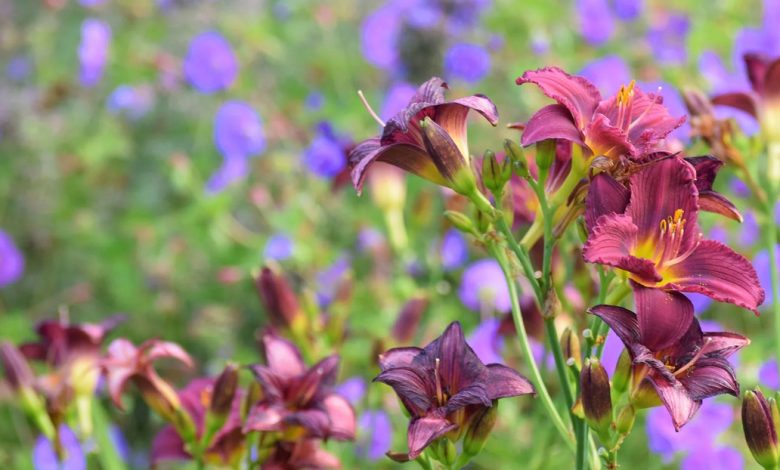
More British gardeners are looking beyond standard trumpet-shaped flowers and choosing forms with narrow petals, twisting segments, unusual spacing, and dramatic silhouettes that hold attention even when borders are not at their peak. These exotic daylilies bring structure as much as colour. Their appeal lies in shape, movement, and contrast, which means they can work in modern planting as easily as in traditional mixed borders.
Professional growers note that gardeners often begin by noticing colour, but stay interested because of form and performance. A short specialist comment from the premier grower of Daylily plants SwallowtailDaylilies makes the point clearly: gardeners who search for spider daylilies plants for sale are often surprised to find that the best long-term choices are not simply the most unusual flowers in a catalogue, but the varieties that combine distinct form with strong scapes, reliable increase, and good garden presence over several seasons. That practical view is worth keeping in mind, especially in the UK, where weather and soil conditions can quickly separate a striking novelty from a genuinely useful plant.
The real value of exotic daylilies is that they widen the design language of the garden. They can look airy rather than heavy, architectural rather than dense, and animated rather than static. They also extend interest through repeated flowering habits, clean foliage, and the way individual flowers appear and disappear within a larger planting composition. For gardeners who want more than a short burst of summer colour, distinctive-form daylilies offer an effective and often underused solution.
What Makes a Daylily Look Exotic
In daylily terms, “exotic” does not simply mean rare or difficult. It usually refers to flowers whose shape departs from the familiar rounded bloom. This includes spider forms, where petals and sepals are long and narrow in relation to their width, as well as unusual forms with pinched, twisted, cascading, or spatulate segments. Some cultivars also carry an exotic quality through sharp colour transitions, pronounced midribs, green throats, or a fluttering outline that makes each flower appear in motion.
What matters in the garden is not classification for its own sake, but the visual effect. A broad-petalled daylily reads as a block of colour. A spider or unusual form reads as line, rhythm, and movement. This difference is more important than many gardeners first realise. In planting design, line changes the way the eye travels. It can soften heavy planting, connect neighbouring plants, and make a border appear more layered. A narrow-petalled daylily can therefore contribute to structure in a way that a rounder flower may not.
Exotic forms are especially useful where gardeners want to avoid a border becoming visually dense in midsummer. Traditional herbaceous planting can easily become solid and crowded by July. Distinctive-form daylilies break that mass into recognisable shapes without creating a sparse or unfinished look. Their flowers hover above foliage and create a lighter profile, which helps nearby grasses, salvias, veronicas, or airy umbels feel more integrated.
There is also a practical side to the term. Many growers use “exotic” informally to signal plants chosen for character rather than simple bedding impact. That does not mean they are delicate. In fact, a well-bred exotic daylily can be just as robust as a more conventional one. The best cultivars have enough substance in the flower to open well in mixed weather, enough branching to carry a succession of buds, and enough foliage quality to remain useful after the first flush of flowers.
For British gardeners, the most successful exotic daylilies are those that balance visual oddity with dependability. A flower that looks astonishing in a photograph but collapses in damp, cloudy weather is less valuable than one that opens properly, holds itself well, and repeats over time. The exotic effect should come from shape and bearing, not from fragility or gimmick.
Why Grower Experience Matters More Than Catalogue Drama
Daylilies are easy to admire online. They are harder to judge accurately without practical growing knowledge behind the description. This is where grower experience becomes important. Specialist growers observe how a variety behaves over years rather than over a single season, and that long view is particularly useful with exotic forms. An unusual flower can attract instant attention, yet still fail to build into a satisfying garden plant if it has weak bud count, poor increase, inconsistent opening, or untidy foliage.
Experienced growers tend to judge daylilies in layers. First comes the flower itself: shape, proportion, colour clarity, and how well it opens. Second comes the plant habit: height, branching, bud count, and whether the flowers sit well above the leaves. Third comes garden value: how well the plant performs through heat, cool spells, wind, and rain, and whether it continues to look balanced when not in flower. This broader assessment often reveals why certain exotic varieties become long-term favourites while others remain collector’s pieces.
That distinction is useful for anyone building a real garden rather than a list of acquisitions. A distinctive daylily should earn its place through performance. It should not need constant apology because the stems lean, the flowers tangle, or the foliage yellows early. The strongest specialist selections are memorable precisely because they combine flair with reliability. Growers who trial widely can identify which plants keep their shape, open cleanly on dull mornings, and recover after weather that is less than ideal.
Grower experience also helps gardeners interpret what catalogue language really means. “Spider” may suggest an aggressively narrow flower, but in the border a moderate spider can often be more useful than an extreme one. “Unusual form” may sound dramatic, yet the most successful cultivars are often those where the twisting and pinching adds elegance rather than distortion. The grower’s practical eye cuts through exaggeration and points towards selections that still look good once the novelty wears off.
This is particularly relevant for newer buyers browsing spider daylilies plants for sale among many eye-catching descriptions. The best choice is rarely the one with the most extreme photograph alone. It is more often the cultivar that has already proved its ability to hold up in ordinary garden conditions. Over time, those are the plants that increase well, divide successfully, and justify the original purchase.
Choosing Distinctive Forms for British Gardens
British conditions favour thoughtful selection. Daylilies are generally adaptable, but not all exotic forms respond equally to damp summers, cool nights, or heavier soils. Gardeners in the UK often get the best results from cultivars with clear constitution: sturdy scapes, flowers with enough substance to resist collapse, and foliage that stays reasonably clean through the season. While drainage and sun remain important, plant choice is often the real deciding factor.
Height is one of the first considerations. Tall, narrow-petalled daylilies can be superb in deep borders where their flowers can move above surrounding perennials. In smaller gardens, however, medium-height cultivars often give a cleaner effect and are less likely to feel lanky. The relation between flower size and scape height matters as well. An exotic flower with long, narrow segments can look refined on a well-proportioned stem, but strained on a plant that is too short or too weak to present it properly.
Colour also deserves more careful thought than many gardeners give it. Exotic forms show best when the flower outline is easy to read. Clear yellows, warm oranges, near-reds, creams, and two-tone combinations often work better than muddy blends, especially at a distance. Darker flowers can be effective, but they need a position where light can catch the shape. In shady or visually crowded borders, the unusual form may disappear unless the colour is strong enough to separate it from the background.
The surrounding planting should support the daylily rather than smother it. Distinctive forms look best against plants with contrasting textures. Fine grasses, upright salvias, fennel, gaura, and small-flowered companions allow the daylily outline to remain visible. Dense mounds with large leaves can swamp the effect. The aim is not to isolate the plant, but to give it enough space that its floral architecture can be seen.
Soil preparation remains straightforward. Daylilies prefer fertile, well-drained soil with moisture retained during active growth, but they are not demanding once established. In heavier ground, organic matter helps greatly. In lighter soils, mulching keeps roots cooler and more evenly moist. What exotic forms dislike most is avoidable stress during establishment. A strong start in the first season usually leads to better clump development and more impressive flowering later.
For gardeners buying selectively rather than in bulk, fewer plants of better quality is often the wiser route. One well-grown, well-sited exotic daylily can contribute more to a border than several indifferent purchases. The purpose is not to collect labels, but to create a stronger summer garden.
How to Use Exotic Daylilies in Design Rather Than Treating Them as Curiosities
Exotic daylilies work best when treated as design plants, not merely as novelties. Too often, unusual cultivars are planted as isolated specimens in a miscellaneous bed, where their qualities are noticed once and then forgotten. Their real strength emerges when they are used to solve visual problems in a border. They can lighten heavy planting, repeat a narrow form across a long bed, or introduce a more contemporary feel into gardens dominated by rounded flowers.
One useful approach is repetition of form rather than repetition of colour. A group of distinctive daylilies in related shapes but different tones can unify a planting more effectively than several unrelated bright flowers. The eye reads the repeated long petals and open centres as a pattern. This makes the border feel intentional, even when the palette is varied. It also allows gardeners to bridge the gap between bold perennials and finer-textured plants.
Exotic daylilies are especially effective in mixed borders that need midsummer lift. Many spring structures fade by then, while later perennials are still building. The daylily steps into this gap without becoming static. Each bloom lasts only a day, but the succession of buds creates sustained presence. Because the flowers appear one after another, the clump never feels frozen or overdone. That makes it easier to combine with grasses and repeating perennial drifts in a naturalistic or semi-formal scheme.
There is also a place for them in smaller urban gardens, where every plant must work hard. A compact but distinctive daylily can provide strong seasonal character without demanding the footprint of a shrub. Where space is tight, the choice of background becomes even more important. Simple evergreen structure, fencing in muted colours, or restrained planting behind the clump can help the flower shape stand out.
Containers are possible, though borders remain preferable for long-term performance. In large pots, exotic daylilies can give striking summer display, but they require careful watering and feeding, and division becomes necessary sooner. In the ground, they generally achieve a more balanced habit and are less vulnerable to irregular moisture.
Gardeners who browse spider daylilies plants for sale often do so because they want something different. The better question, however, is different for what purpose. When the answer is linked to garden structure, rhythm, and seasonal balance, the purchase is more likely to succeed. Exotic daylilies reward gardeners who think in terms of placement and design, not simply possession.
Maintenance, Division, and the Reality of Long-Term Performance
One reason daylilies remain widely trusted is that maintenance is moderate and predictable. Exotic forms do not change that basic picture, but they do benefit from attentive observation. The first few years tell the gardener a great deal. A good plant increases steadily, sends up stronger scapes as the clump matures, and flowers more generously with sensible feeding and moisture. A weaker one may remain sparse or throw stems inconsistently, no matter how attractive the flowers appear in photographs.
Routine care is simple. Remove spent scapes once flowering is over, tidy damaged foliage, and keep weeds from building through the crown. In dry spells, a thorough soak is better than frequent surface watering. A spring mulch helps conserve moisture and supports steady growth. Excessive feeding is unnecessary, but a balanced regime that favours healthy root development and bud formation can improve performance.
Division is usually needed when flowering declines or the clump becomes congested. In the UK, early autumn and spring are both workable, though local conditions matter. Replant divisions promptly, water them in well, and allow time for re-establishment before expecting full display. Distinctive-form daylilies often show their best after they have settled, not immediately after planting. Patience is part of getting the full value from them.
Long-term performance depends on matching plant to place. Even a strong cultivar will disappoint if crowded by aggressive neighbours or shaded too heavily during the day. Conversely, a daylily that seems average in a pot or nursery row may become exceptional once given proper space and conditions. This is another reason grower-backed advice matters. It reflects what happens after sale, not merely at the point of purchase.
Disease and pest issues are usually manageable, though slugs may trouble new growth in some gardens, and poor air movement can worsen untidy foliage. Most problems are reduced by good spacing and sound cultivation. The aim is not perfection at every moment, but a clump that remains attractive and useful across the season.
When assessing a daylily after several years, gardeners should ask practical questions. Does it flower freely? Does the form still look elegant in average weather? Does it contribute to the border even outside peak bloom? Plants that answer yes to these questions deserve permanent space. Those that do not may still interest collectors, but they are not necessarily the best garden plants.
The Best Reason to Grow Them Is Not Novelty but Lasting Garden Value
Exotic daylilies succeed when gardeners move beyond the idea of rarity as the main attraction. Their strongest quality is not that they look unusual in isolation, but that they improve the way a summer garden functions visually. They bring line where there is too much mass, movement where there is too much stillness, and distinction where planting has become predictable. In a well-planned border, that contribution matters more than any single flower’s strangeness.
Grower experience reinforces this point. The most worthwhile selections are not always the loudest or most extreme. They are the ones that combine unusual form with sound constitution, reliable flowering, and enough versatility to sit naturally among other perennials. That balance is what turns a curiosity into a dependable garden plant. It also explains why specialist growers remain valuable guides in an age of endless online choice.
For British gardeners, exotic daylilies offer a practical way to refresh planting without abandoning familiar strengths. They are hardy, adaptable, and capable of real sophistication when chosen well. Their form allows them to bridge different garden styles, from looser prairie-inspired schemes to more controlled mixed borders. They can be contemporary without being stark, and expressive without becoming chaotic.
There is also pleasure in the way they reward repeated looking. A rounded flower often gives its effect at once. A twisting or spider form reveals more over time: the spacing of the petals, the curve of the sepals, the way morning and evening light alter the outline. This slower visual interest suits gardeners who value plants as part of a lived-in landscape rather than as instant spectacle.
Anyone exploring spider daylilies plants for sale should therefore approach the category with a clear sense of purpose. Seek out flowers with character, certainly, but judge them by how they will work in a border, how they will grow over several years, and whether the plant behind the bloom is strong enough to justify its place. That is where expert selection and experience make the difference.
Exotic daylilies are at their best when they do more than look different. They should also garden well. When they combine distinctive form with proven performance, they become one of the most useful and intelligent ways to sharpen the summer border without making it feel forced.